

The 2026 BMW M2 continues BMW’s tradition of building compact performance cars that reward real driving skill. From the first few miles, it is clear this car is designed for people who care about how a vehicle feels, not just how fast it goes in a straight line. BMW keeps the focus on balance, throttle response, and steering feedback, which makes the M2 one of the most engaging cars in its class.
For drivers considering their next performance coupe, the 2026 BMW M2 stands out because it does not try to be everything at once. Instead, it stays true to what an M car should be. It delivers power in a controlled way, responds quickly to driver inputs, and feels planted whether you are carving through back roads or driving to work.
What Sets the 2026 BMW M2 Apart
The 2026 BMW M2 is BMW M in its most direct form. It is built to feel quick on its feet, easy to place on the road, and rewarding when you drive it with intent. BMW keeps the M2 compact on purpose. A smaller footprint changes everything, how the car turns in, how it rotates mid-corner, and how confident you feel when the road gets tight and twisty.
If you have driven (or even just researched) the M3 or M4, you already know those cars bring serious speed. The M2 takes a different approach. It gives you more of that “connected” feeling because the car is smaller, the responses are more immediate, and the feedback comes through clearly.
To see how the M2’s engineering priorities have held up over time, tracing the M2 Competition’s roots back to the E46 puts the current car’s development in clear perspective.
A Smaller Body with a Bigger Sense of Control
Size sounds like a simple detail, but it changes the whole driving experience. The M2’s shorter wheelbase helps it rotate faster when you turn the wheel, and the wide stance helps it stay stable once it is loaded up in a corner.
Here’s what that translates to in real life:
- You feel the front end bite sooner when you turn in.
- The car changes direction quickly in S-curves and on-ramps.
- It feels easier to “place” the car in your lane, especially on narrow roads.
- The chassis feels eager, not heavy or slow to respond.
BMW tunes the steering and suspension to match that smaller platform, so the car does not just feel fast, it feels precise.
Rear Wheel Drive Still Matters in 2026
A lot of modern performance cars go to all wheel drive because it makes acceleration easier in bad conditions and helps drivers put power down with less effort. BMW could have done that here, but the 2026 BMW M2 stays rear wheel drive, and that is a big reason why it feels the way it does.
Rear wheel drive matters because it changes how the car behaves when you push it:
- The front wheels focus on steering, so turn-in can feel cleaner.
- The rear wheels handle power, so you can feel the car “rotate” under throttle.
- Weight transfer becomes part of how you drive the car, not something the car hides.
- Corner exits feel more adjustable, you can add throttle gradually and shape your line.
In simple terms, rear wheel drive gives you more say in what the car does. It rewards smooth inputs, and it teaches you a lot about traction and balance.
Near 50:50 Weight Distribution Gives the M2 Balance
BMW aims for close to a 50:50 weight split because it helps the car stay predictable. When the balance is right, the front tires do not feel overloaded, and the rear does not feel like it is trying to swing wide without warning.
That balance shows up in a few key moments:
- Mid-corner stability: the car holds a line without constant corrections.
- Transition control: when you move from braking to turning, the chassis stays calm.
- Predictable grip: you feel the limits coming, rather than being surprised by them.
This is one reason the M2 feels “natural” when you drive it hard. You do not need to fight it. You can sense what the tires are doing and adjust before things get messy.
It Communicates Instead of Filtering Everything Out
Some performance cars are fast but feel distant. They isolate you from the road with heavy sound deadening, overly assisted steering, or stability systems that step in too early. The M2 takes a more driver-first approach. It is still modern and refined, but it does not hide the basics.
You can expect feedback in the places that matter:
- Steering that tells you when the front tires are loading up.
- A chassis that responds clearly to throttle changes.
- Braking feel that helps you judge how much grip you have.
- A sense of rotation that is easy to control once you learn it.
If you enjoy driving for the sake of driving, this is the difference you will notice right away.
What Kind of Driver Usually Loves the M2?
The M2 is not only for track days. Plenty of people buy it as a daily driver. Still, it tends to fit certain preferences better than others.
The 2026 BMW M2 is usually a strong match if you want:
- A performance coupe that feels “alive” at real-world speeds
- A car that stays engaging on short drives, not just long highway trips
- Feedback you can feel through steering, throttle, and chassis balance
- Rear wheel drive dynamics and a playful personality
- A smaller car that feels easier to handle than larger performance models
If you want the easiest launch, maximum grip in all weather, and the most hands-off speed, an all wheel drive performance car may fit better. If you want involvement and control, the M2 is built for that.
Common Questions Readers Have About What Makes the M2 Different
Is the M2 basically a smaller M3 or M4?
Not exactly. The M2 shares M engineering DNA and certain powertrain roots, but it drives differently because of its size, wheelbase, and tuning. The M3 and M4 feel more like high-speed machines that stay composed at very high pace. The M2 feels more nimble and more eager to rotate, especially on tighter roads.
Why would someone pick the M2 over the M3 or M4?
Most buyers choose the M2 because they want a more compact, more playful driving feel. The M2 is easier to place on the road, quicker to change direction, and often feels more “connected” in everyday driving. It is also a way to get full M character without stepping into the size of the M3 or M4.
Does rear wheel drive make the M2 harder to drive?
It can, depending on conditions and how you drive. In dry weather, rear wheel drive is not difficult for most drivers, especially with modern traction and stability systems. In rain, cold temperatures, or worn tires, rear wheel drive requires more care with throttle. The upside is that it gives you more control and better feedback as you learn the car.
Is the M2 still practical for daily driving?
Yes, for many people. It is a compact coupe, so space is not the main selling point, but it works well as a daily driver if you are comfortable with a smaller back seat and a sportier ride. The key is that the M2 does not need a track to feel fun. It stays engaging on normal roads.
What does “balanced” really mean behind the wheel?
It means the car does not feel like it is fighting itself. The front end turns in without feeling heavy, the rear follows without feeling unstable, and the car stays predictable as you transition from braking to turning to acceleration. That balance helps you drive with confidence because the M2 reacts in a way that makes sense.
If you want, I can also expand this section one step further by adding a short comparison block (M2 vs M3 vs M4) and a quick “who should buy this” checklist that fits the consideration stage.
Engine and Performance Specs
At the core of the 2026 BMW M2 is BMW’s S58 3.0-liter TwinPower Turbo inline six engine. This engine has already proven itself in other M models, and in the M2 it feels especially responsive due to the car’s size and weight.
Drivers who want to see how the S58 engine behaves in a larger, four-door platform can find a useful reference in the 2025 BMW M3 review, which covers the same powertrain family in a different chassis.
Power Output and Drivetrain
Performance highlights for the 2026 BMW M2 include:
- 3.0-liter TwinPower Turbo inline six engine
- Approximately 453 horsepower
- Strong mid-range torque for quick acceleration
- Rear wheel drive layout
- Six-speed manual or eight-speed M Steptronic automatic
Power delivery is smooth and predictable. Instead of hitting all at once, boost builds steadily, which makes it easier to control the car when exiting corners. BMW’s active M differential also plays a big role here by managing traction and helping the rear wheels put power down efficiently.
Acceleration and Speed
With the automatic transmission, the 2026 BMW M2 reaches 60 mph in just over four seconds. The manual version is slightly slower on paper, but many drivers prefer it for the added engagement. Top speed is electronically limited to 155 mph, with the option to raise it using the M Driver’s Package.
What stands out is not just how fast the car is, but how confidently it delivers that speed. Throttle response is immediate, and the engine pulls hard through the rev range without feeling strained.
Chassis Tuning and Handling
BMW M engineers put a lot of effort into how the 2026 BMW M2 handles. The goal is to create a car that feels stable at speed but still playful when pushed.
Suspension Setup
The M2 uses adaptive M suspension with several driving modes. Each mode changes how the dampers, steering, and throttle respond.
- Comfort mode works well for daily driving
- Sport mode sharpens responses for spirited roads
- Sport Plus is designed for track use
The suspension keeps the car flat through corners while still absorbing bumps on the street. This balance makes the M2 practical for everyday use without losing its performance edge.
Steering and Driver Feedback
Electric power steering in the 2026 BMW M2 is tuned specifically for this chassis. Steering inputs feel quick and precise, especially around center. As you load the front tires in a corner, the steering communicates grip levels clearly.
This feedback builds confidence. You know when the tires are approaching their limit, which helps you drive the car smoothly rather than fighting it.
Exterior Design and Function
The design of the 2026 BMW M2 is aggressive, but every element serves a purpose. Wide fenders allow for larger wheels and tires, which improve grip. Large air intakes feed cooling air to the engine and brakes.
Exterior details include:
- Flared wheel arches
- Quad exhaust outlets
- Sculpted rear diffuser
- Optional carbon fiber roof
BMW keeps the styling focused on function rather than decoration. The result is a car that looks ready to perform because it is.
BMW M2 Interior and Driver Focus
BMW M2 Interior Layout
The BMW M2 interior is designed around the driver. Everything you need is within easy reach, and the seating position keeps you low and centered. Visibility remains good despite the car’s wide stance, which helps in both daily driving and spirited runs.
Materials feel durable and purposeful. BMW uses leather, Alcantara, and carbon fiber trim in high-contact areas to match the car’s performance intent.
Seats and Comfort
Standard M Sport seats provide strong side support without feeling overly firm. For drivers who plan to spend time on track, optional carbon bucket seats reduce weight and hold you in place during hard cornering.
Interior highlights include:
- M steering wheel with thick grip
- M mode buttons for quick adjustments
- Adjustable bolsters and lumbar support
- Clear digital gauge display
Technology Inside the Cabin
The BMW M2 interior features BMW’s iDrive system with a curved display that combines the instrument cluster and infotainment screen. The layout keeps performance data easy to read while still offering navigation and media controls.
Technology features include:
- iDrive with touch and controller input
- Live Cockpit Professional
- Wireless Apple CarPlay and Android Auto
- M specific performance displays
The system supports the driving experience instead of distracting from it.
Transmission Choices and Driving Feel
BMW continues to offer a manual transmission in the 2026 BMW M2, which is a major draw for enthusiasts. The clutch engagement feels smooth, and gear changes are precise.
The automatic transmission offers fast shifts and adapts well to different driving styles. In manual mode, paddle response is quick, making it easy to stay in the right gear during aggressive driving.
Manual or Automatic?
Choosing a transmission depends on how you plan to use the car:
- Manual transmission for engagement and control
- Automatic transmission for faster acceleration and convenience
- Both options support performance driving modes
Braking Performance and Control Systems
Strong brakes are essential in a car like the M2. The 2026 BMW M2 comes standard with M compound brakes that deliver consistent stopping power. Pedal feel stays firm even after repeated hard braking.
Optional carbon ceramic brakes offer improved fade resistance and reduced weight, which benefits track driving.
Control systems include adjustable traction control and M Dynamic Mode, allowing drivers to fine tune how much assistance they want.
Pricing and Available Options
Pricing for the 2026 BMW M2 is expected to start in the mid $60,000 range. This places it as one of the most accessible full M cars in BMW’s lineup.
Standard Equipment
Standard features include:
- Adaptive M suspension
- M Sport seats
- M compound brakes
- Live Cockpit display
- Performance wheels and tires
Optional Packages
Available upgrades include:
- M Driver’s Package
- Carbon fiber exterior and interior trim
- Carbon bucket seats
- Premium sound and driver assistance features
BMW allows buyers to build a car that matches their priorities without overcomplicating the process.
Everyday Usability
Despite its performance focus, the 2026 BMW M2 works well as a daily driver. Ride quality stays controlled, cabin noise remains reasonable, and the rear seats provide extra storage or occasional passenger space.
Fuel economy reflects the car’s performance nature, but it remains manageable for the segment. Regular driving also helps keep maintenance predictable, especially when following BMW’s service guidelines.
How the 2026 BMW M2 Compares to Competitors
Many compact performance coupes promise excitement, but few deliver the same level of driver connection. The 2026 BMW M2 stands out by combining power, balance, and feedback in a way that feels natural rather than forced.
Compared to larger M models, the M2 feels more agile. Compared to non BMW rivals, it offers a clearer connection between driver and machine.
For context on where the M2 sits within BMW’s broader performance range, a look at BMW’s five fastest models offers a useful benchmark across the full
Frequently Asked Questions About 2026 BMW M2
What makes the 2026 BMW M2 different from earlier versions?
The 2026 BMW M2 refines suspension tuning, steering response, and interior technology while keeping the core performance formula intact.
Does the 2026 BMW M2 still come with a manual transmission?
Yes. BMW continues to offer a six-speed manual for drivers who want maximum involvement.
How does the BMW M2 interior compare to other M models?
The BMW M2 interior feels more compact and driver focused, with fewer distractions and a tighter layout.
Is the 2026 BMW M2 good for track driving?
Yes. Adaptive suspension, strong brakes, and adjustable stability systems make it well suited for track use.
What is the expected starting price for the 2026 BMW M2?
Pricing is expected to begin in the mid $60,000 range, depending on options.
Does the 2026 BMW M2 include driver assistance features?
Optional driver assistance systems are available, though the focus remains on driving engagement.
Final Thoughts on the 2026 BMW M2
The 2026 BMW M2 proves that BMW still values the fundamentals of performance driving. With a responsive engine, balanced chassis, and a purposeful BMW M2 interior, it delivers a driving experience that feels honest and rewarding. For drivers who want a compact performance coupe that puts control and feedback first, the M2 remains a standout choice.
To learn more about the 2026 BMW M2 or to see one in person, contact Braman BMW of Jupiter today.
Recent Posts
-
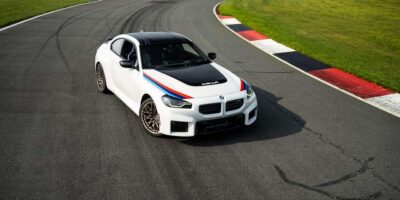
2026 BMW M2 Review, Pricing, and Specs
March 02, 2026 -
2026 BMW 3-Series Review, Pricing, and Specs
March 01, 2026 -

2026 BMW Z4 Review, Pricing, and Specs
February 03, 2026 -
2026 BMW i7 Review, Pricing, and Specs
February 02, 2026 -

2026 BMW 7 Series Vs. 2026 Mercedes-Benz S-Class
January 22, 2026


